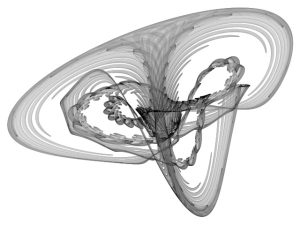

The Morphogenesis Processes
The amorphous matter can self-organize into complex forms without external influence. In biology, the diversity of forms and their function raises the question of whether morphogenesis follows a similar self-organization process or results from the interaction between a morphogenetic field and biostructure.
We explore:
- Self-organization and pattern formation
-Natural object geometry and properties
-Electromagnetic fields of fractal structures and their effects on living matter
-Bio-mimetic engineering, applying natural form-function studies to new technologies

Life in Context
Describing Earth as a **living planet** highlights its complex, hierarchical system of interrelated subsystems that exchange energy, matter, and information, maintaining a state of **dynamic stability** (Geostasis).
This perspective on the life-environment relationship and the balance between negentropic and entropic processes calls for :
- A specialised methodology,
- A rethinking of investigative tools,
- A reassessment of empirical observations and philosophical insights on life in context.

Cognitive Phenomena
While computers can increasingly model cognitive processes, a fundamental distinction may still separate living intelligence from artificial systems.
The brain is often viewed as a complex biochemical machine that processes sensory information to interpret reality, yet its role may extend beyond that. Understanding what sets human cognition apart remains a key question in the study of intelligence.
We focus on:
- The complexity of mental processes and how they can be replicated using artificial neural architectures,
- Chaotic phenomena and nonlinear dynamics,
- Stochastic resonance.
- Physiological signals and how they can be measured and analysed to develop new biomedical applications,

Technological, Biomedical, and Economic Applications of Complexity
The study of nonlinear phenomena has led to a coherent set of concepts, theories, and models applicable to the analysis of complex systems. These open systems evolve far from thermodynamic equilibrium and are characterized by a hierarchical structure, exhibiting distinct behaviours at different organizational levels.
Studying the **linear vs. nonlinear** and **complicated vs. complex** relationship requires:
- Adapting experimental setups to the characteristics of complex systems.
- Modifying measurement and control instruments accordingly.
-
- Refining experimental protocols to capture essential system dynamics.
- Developing new methods to objectively assess system evolution in context.

Complex Methods for Analysis, Characterization, and Prediction of Micro- and Macroeconomic Phenomena
The research aims to prototype new **automatic and semi-automatic prediction algorithms and methodologies**. As an initial focus, the team analyzes a significant dataset of sales information from the Romanian economy to enhance **sales forecasting accuracy**.
The study integrates **classical predictive models** (linear regressions, data mining, Bayesian networks, multidimensional correlation analysis) with **complexity science approaches** (fractal geometry, chaos theory, agent-based models, genetic algorithms, constructal theory).